⚡ Quick Answer & Key Takeaways
Balanced nutrition supports nervous-system recovery by stabilizing blood sugar and lowering cortisol spikes. Top everyday foods include dahi (probiotic curd), soaked walnuts/almonds, palak (magnesium), tulsi/chamomile herbal infusions, dark chocolate (70%+), oats, and berries.
7 FoodsEveryday Kitchen Staples
Gut-Brain90% Serotonin Link
MagnesiumCalms Nervous System
Zero FadsIndian Diet Friendly
📑 Inside This Guide (Quick Jump)
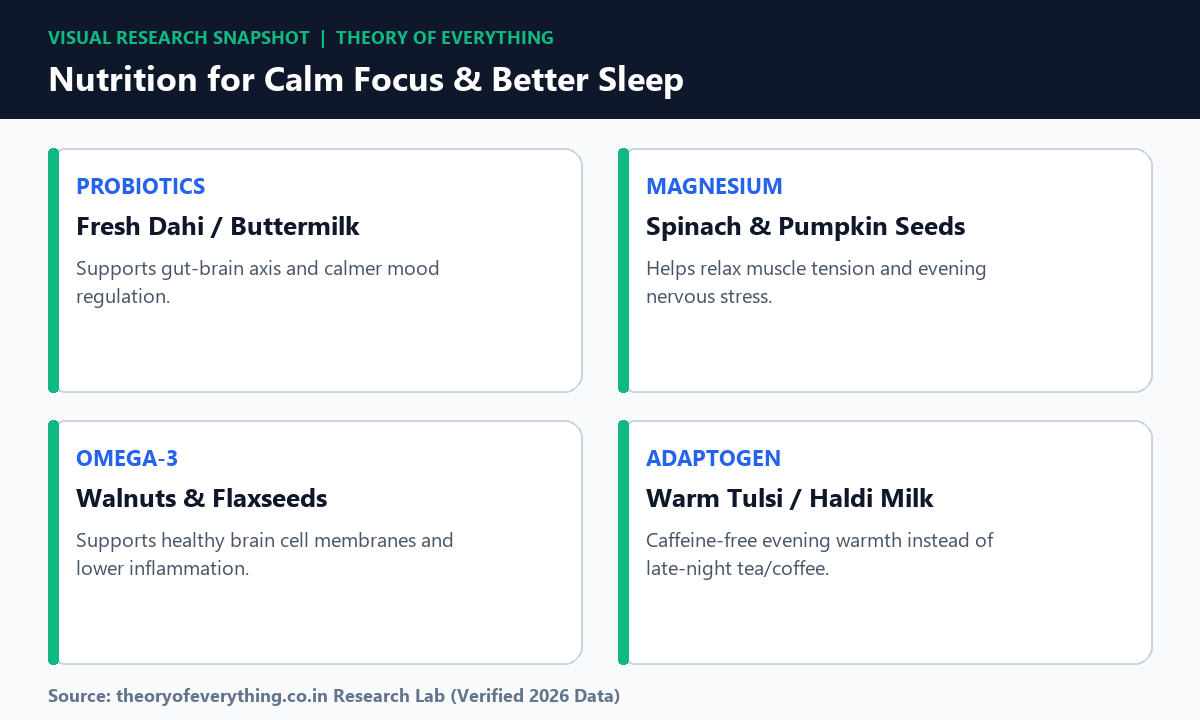
7 Everyday Foods That Help Lower Stress Naturally
- Fresh Homemade Curd (Dahi) or Chaas: Rich in live probiotics that nurture the gut-brain axis.
- Spinach (Palak) & Pumpkin Seeds: Packed with magnesium, a mineral rapidly depleted during high-stress weeks.
- Soaked Walnuts & Chia/Flaxseeds: Plant-based omega-3 fats shown to blunt inflammatory stress responses.
- Warm Tulsi Ginger Infusion: A gentle caffeine-free ritual that slows breathing and replaces afternoon excess coffee.
- Rolled Oats & Complex Millets: Steady blood glucose prevents irritable afternoon energy crashes.
- Dark Chocolate (70%+ Cocoa, small square): Flavonoids support mild mood lift without heavy refined sugar spikes.
- Citrus Fruits & Amla: High Vitamin C helps normalize elevated stress-hormone recovery.
Watch Out for Caffeine & Sugar Rollercoasters
Drinking strong coffee after 3 PM or skipping lunch followed by sugary snacks mimics panic symptoms (racing pulse, jitters). Keep meals protein- and fiber-balanced.
💡 Expert Insight: Pair calmer stress-supportive meals with an accurate daily calorie & macro baseline—calculate yours free in 10 seconds.
Calculate Your Daily Balanced Calorie & Protein Target
Find your maintenance calories and healthy energy targets without fad diets.
Frequently Asked Questions (FAQs)
Does Vitamin B12 or magnesium deficiency worsen stress?
Yes. Low magnesium, B12, and poor sleep often increase fatigue, irritability, and heightened stress sensitivity.