⚡ Quick Answer & Key Takeaways
Psychologists show procrastination is not a time-management problem—it is an emotional avoidance problem (fear of failure, overwhelm, or boredom). Shrink the first step to 2 minutes, remove friction, and focus on messy first drafts instead of perfection.
7 StepsClinical Psychology
2 MinMicro-Start Trigger
Zero GuiltSelf-Compassion Works
2026Action Workbook
📑 Inside This Guide (Quick Jump)
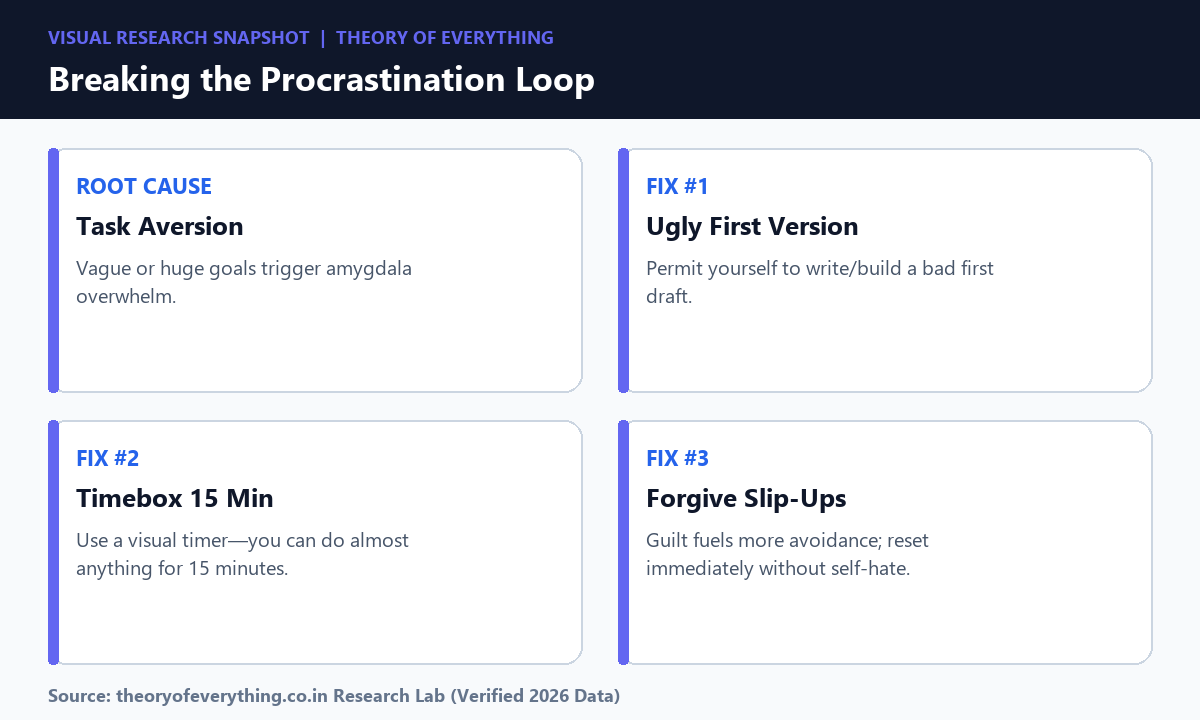
Why We Procrastinate Even When We Care
When a project feels ambiguous, intimidating, or high-stakes, your brain seeks instant dopamine relief (checking reels, cleaning a desk, making tea). Labeling yourself “lazy” triggers shame, which pushes you right back to distraction.
7 Practical Ways to Beat Procrastination Today
- Define the Physical Next Action: Change “Finish report” to “Open document and write 3 bullet headers.”
- Lower the Bar to Entry: Commit to 10 focused minutes. Once started, Zeigarnik Effect pulls you forward.
- Eliminate Friction: Keep study materials open on your desk and block distracting feeds during work windows.
- Separate Drafting from Editing: Perfectionism at minute one paralyzes output. Draft messily first; polish later.
💡 Expert Insight: Break scary tasks into crisp 15-minute checklists using our free AI Prompt Generator, or calculate your exact exam/project countdown with our Date Calculator.
Plan Deadlines & Focus Sprints with Our Date Calculator
Calculate exact working days until your exam, launch, or deadline.
Frequently Asked Questions (FAQs)
Why do smart perfectionists procrastinate the most?
Perfectionists tie self-worth to flawless results, so avoiding a task temporarily protects their ego from potential failure.