⚡ Quick Answer & Key Takeaways
Vitamin B12 is essential for red blood cell formation, DNA synthesis, and nerve insulation. Because plant foods naturally lack active B12, Indian vegetarians have high rates of deficiency—causing fatigue, pins-and-needles tingling, pale skin, and memory fog. Dairy, curd, fortified cereals, and doctor-guided supplements restore healthy levels.
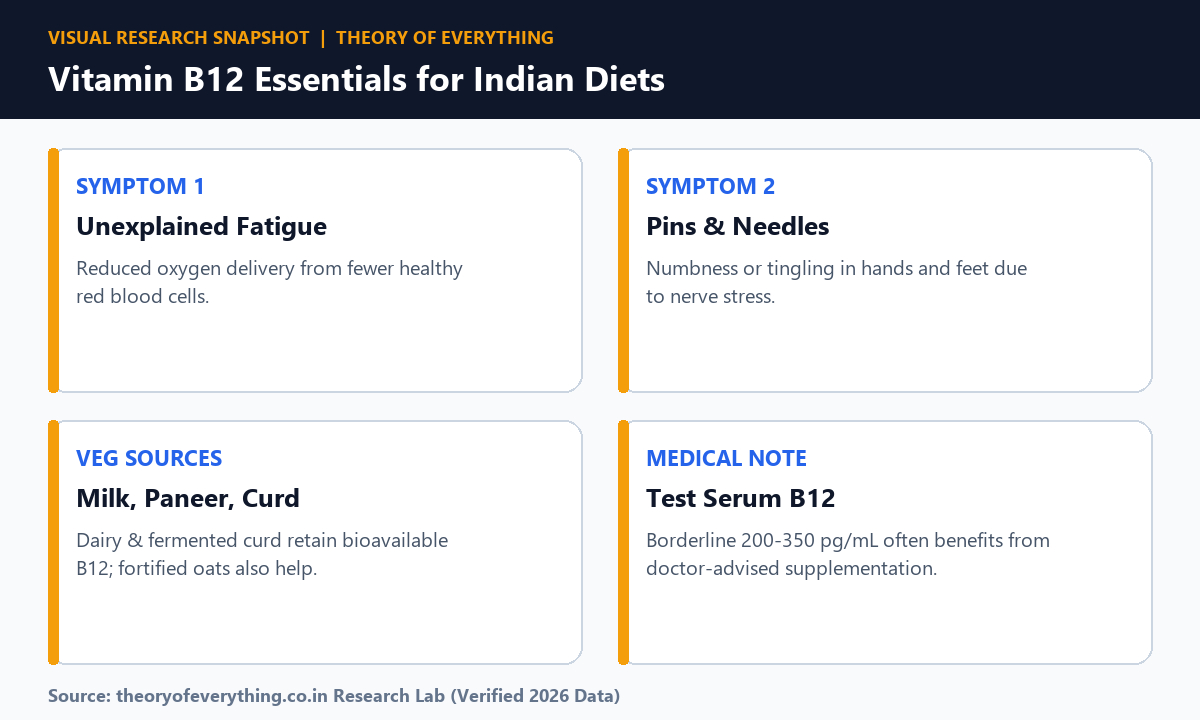
Common Signs of Low Vitamin B12
- Persistent daytime exhaustion despite getting 7–8 hours of sleep
- Tingling (“pins and needles”) in fingers, toes, or numbness in extremities
- Difficulty concentrating (“brain fog”), irritability, or pale/yellowish complexion
- Smooth, sore tongue or recurring mouth ulcers
Practical B12 Sources for Indian Households
Active Vitamin B12 occurs naturally in animal-derived foods—so strict vegans and minimal-dairy vegetarians need intentional planning:
- Daily Dairy: Cow/buffalo milk, fresh curd (dahi), paneer, and buttermilk.
- Fortified Foods: B12-fortified nutritional yeast, plant milks, and breakfast cereals.
- Eggs & Fish (for non-vegetarians / eggetarians).
Disclaimer: Always verify deficiency with a standard Serum Vitamin B12 blood test and follow your physician’s dosage before taking high-dose oral or injectable supplements.
Calculate Healthy Daily Nutrition & Calorie Targets
Check BMI and daily calorie goals free with zero sign-up.
Frequently Asked Questions (FAQs)
Which Indian vegetarian foods contain Vitamin B12?
Milk, fresh curd (dahi), paneer, cheese, and B12-fortified nutritional yeast or cereals provide bioavailable Vitamin B12 for vegetarians.